
 EN
EN

In the competitive world of industrial and commercial electrical components, product quality is not a marketing slogan — it is a measurable commitment that separates reliable manufacturers from the rest. epk electric has built its reputation precisely on this foundation, applying rigorous quality control processes across every stage of product development and manufacturing. Understanding how epk electric approaches quality gives buyers, engineers, and procurement professionals the confidence they need when specifying electrical components for demanding environments.
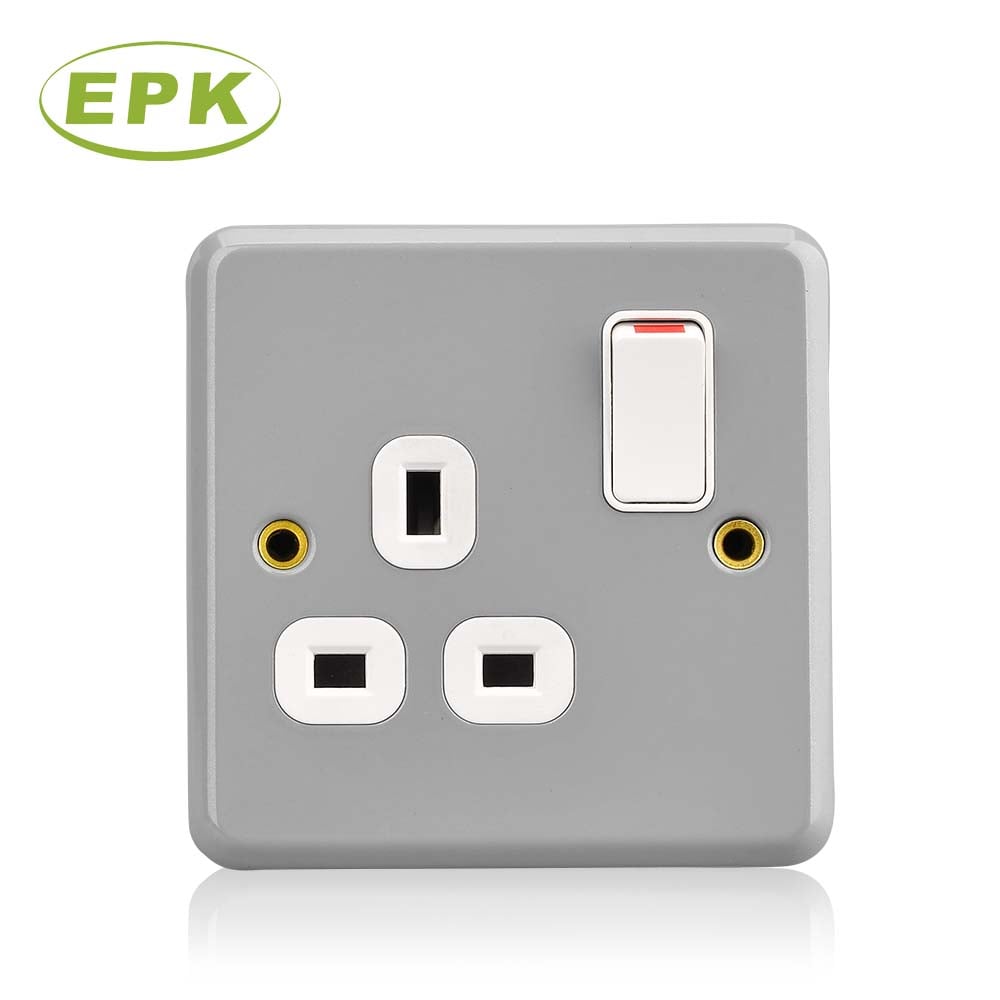
The quality control philosophy at epk electric is not limited to a final inspection step at the end of a production line. Instead, it is embedded into the entire product lifecycle — from raw material selection and component sourcing through to design validation, in-process manufacturing checks, and post-production testing. This integrated approach ensures that every epk electric product leaving the facility meets the performance, safety, and durability standards that industrial and commercial customers depend on.
Material Selection and Component Sourcing Standards
Why Raw Material Quality Defines the End Product
The quality of any electrical product is fundamentally determined before a single component is assembled. epk electric understands this principle deeply, which is why its quality control process begins at the material sourcing stage. Only materials that meet defined mechanical, thermal, and electrical specifications are approved for use in production.
For products such as metal-clad sockets and industrial outlets, the choice of housing material directly affects impact resistance, corrosion resistance, and long-term dimensional stability. epk electric applies strict incoming material inspection protocols, verifying that each batch of raw material conforms to the required standards before it enters the production workflow.
This upstream quality gate prevents defective or substandard materials from ever reaching the assembly stage, which is a far more cost-effective and reliable approach than attempting to catch material-related defects at the end of production. The discipline applied at this stage is one of the clearest indicators of how seriously epk electric treats product integrity.
Component Traceability and Supplier Qualification
Beyond raw materials, epk electric maintains a structured supplier qualification process for all sub-components used in its products. Electrical contacts, terminal blocks, neon indicators, and switching mechanisms must all meet defined performance criteria before they are approved for use in epk electric assemblies.
Traceability is a key element of this process. By maintaining records that link finished products back to specific material batches and component suppliers, epk electric can respond quickly and precisely if a quality issue is ever identified in the field. This level of traceability is a hallmark of mature quality management systems and reflects the operational discipline that epk electric applies throughout its supply chain.
Design Validation and Engineering Controls
Translating Standards into Product Design
epk electric products are designed to comply with recognized international and regional electrical standards, including British Standard specifications that govern socket outlet dimensions, contact ratings, and safety features. The design validation process ensures that engineering drawings, tolerances, and material specifications are all aligned with these requirements before production tooling is finalized.
For a product like the EPK Model 3913S metal-clad switched socket, this means verifying that the 13A current rating, 250V voltage rating, neon indicator circuit, and surface-mounted enclosure geometry all conform to the applicable standard. Design validation at epk electric is not a one-time activity — it is revisited whenever a design change, material substitution, or new application requirement is introduced.
This engineering discipline ensures that the performance characteristics specified on an epk electric product datasheet are genuinely achievable under real-world operating conditions, not just under ideal laboratory scenarios.
Tooling Precision and Process Engineering
The quality of a manufactured component is directly influenced by the precision of the tooling and processes used to produce it. epk electric invests in well-maintained, accurately calibrated tooling to ensure that dimensional consistency is achieved across production runs. For metal-clad enclosures, this means that panel cutouts, mounting hole positions, and cover plate dimensions remain within tight tolerances batch after batch.
Process engineering at epk electric also defines the correct assembly sequences, torque specifications for fasteners, and insertion forces for electrical contacts. These process controls reduce the risk of assembly errors that could compromise the safety or performance of the finished product. When every operator follows a clearly defined and validated process, the variability that leads to quality escapes is significantly reduced.
In-Process Quality Inspection
Checkpoint-Based Monitoring During Assembly
Rather than relying solely on end-of-line testing, epk electric integrates quality inspection checkpoints throughout the assembly process. At defined stages of production, trained quality personnel verify that critical dimensions, contact alignments, and mechanical fits meet specification before the product advances to the next assembly step.
This checkpoint-based approach means that any deviation from specification is caught early, when correction is straightforward and inexpensive. It also prevents the accumulation of defects — a situation where a small error at one stage compounds into a more serious problem by the time the product is fully assembled. The in-process discipline at epk electric is a direct contributor to the consistency that customers experience across large order quantities.
For buyers specifying epk electric products for large-scale installations, this consistency is not a minor detail. When hundreds or thousands of sockets must be installed across a facility, dimensional and functional uniformity directly affects installation speed, compatibility with mounting hardware, and long-term maintenance predictability.
Statistical Process Control and Trend Monitoring
epk electric applies data-driven monitoring techniques to track process performance over time. By collecting measurement data at key inspection points and analyzing trends, the quality team can identify when a process is drifting toward its tolerance limits — and take corrective action before defective products are produced.
This proactive approach to quality management is more effective than reactive inspection alone. It reflects the understanding that quality is not just about catching defects — it is about maintaining the process conditions that prevent defects from occurring in the first place. The analytical rigor applied by epk electric at this stage demonstrates a quality culture that goes well beyond basic compliance.
Final Product Testing and Verification
Electrical Safety and Performance Testing
Before any epk electric product is approved for shipment, it undergoes final electrical testing to verify that it meets its rated performance specifications. For switched socket outlets, this includes verification of contact resistance, insulation resistance, dielectric withstand voltage, and correct operation of the switching mechanism and neon indicator.
These tests confirm that the product will perform safely and reliably when installed and energized. epk electric uses calibrated test equipment to ensure that measurement results are accurate and traceable to recognized standards. Test records are maintained as part of the product quality documentation, providing an auditable record of conformance for each production batch.
For industrial customers operating in environments where electrical safety is a regulatory and operational priority, the knowledge that epk electric conducts systematic final testing provides meaningful assurance. It means that the products arriving on site have been individually or batch-verified against defined acceptance criteria, not simply assumed to be correct based on process controls alone.
Mechanical and Environmental Durability Checks
Electrical performance is only one dimension of product quality. epk electric also verifies the mechanical robustness of its products, including the integrity of enclosure joints, the retention force of socket contacts, and the operation of switching mechanisms under repeated cycling. For metal-clad products designed for heavy-duty industrial use, these mechanical checks are essential to confirming that the product will withstand the physical demands of its intended environment.
Where applicable, epk electric products are also evaluated for resistance to environmental factors such as moisture ingress and temperature variation. These checks ensure that the product's rated environmental protection level is genuinely achieved, not just claimed. The combination of electrical and mechanical verification at the final stage gives epk electric customers a complete picture of product quality before installation.
Continuous Improvement and Customer Feedback Integration
Closing the Loop with Field Performance Data
Quality control at epk electric does not end when a product leaves the factory. The company actively monitors field performance data and customer feedback to identify any patterns that might indicate a quality improvement opportunity. When a customer reports an issue, epk electric treats it as a valuable data point rather than an isolated complaint.
This feedback loop allows epk electric to refine its manufacturing processes, update its inspection criteria, and in some cases revise product designs to address root causes rather than symptoms. The willingness to learn from field experience and translate those learnings back into the production system is a defining characteristic of a quality-focused manufacturer.
For B2B buyers, this commitment to continuous improvement means that epk electric products tend to get better over time, not stagnate. It also means that when a customer raises a concern, they are engaging with a supplier that has the systems and the mindset to respond constructively.
Internal Audits and Quality System Reviews
epk electric conducts regular internal audits of its quality management processes to verify that documented procedures are being followed and that the quality system remains effective. These audits examine everything from material receiving records to final test documentation, identifying gaps or inconsistencies that could affect product quality if left unaddressed.
Quality system reviews at the management level ensure that quality objectives are aligned with business goals and that sufficient resources are allocated to maintain and improve quality performance. This governance structure gives epk electric the organizational discipline to sustain quality standards over the long term, rather than allowing them to erode under production pressure.
The combination of operational quality controls and management-level oversight is what allows epk electric to deliver consistent product quality across diverse product lines and varying production volumes. It is a system designed for reliability, not just compliance.
FAQ
What quality standards do epk electric products comply with?
epk electric designs and manufactures its products to comply with recognized electrical standards, including British Standard specifications for socket outlets and related components. Specific compliance details vary by product model, and epk electric maintains documentation to support customer verification requirements.
How does epk electric ensure consistency across large order quantities?
epk electric achieves production consistency through a combination of validated tooling, defined assembly processes, in-process inspection checkpoints, and statistical monitoring of key process parameters. These controls work together to minimize variability and ensure that products from large production runs meet the same specifications as qualification samples.
Does epk electric conduct electrical safety testing on finished products?
Yes. epk electric performs final electrical testing on its products, including checks for contact resistance, insulation resistance, and dielectric withstand voltage. Test results are recorded and maintained as part of the quality documentation for each production batch, providing traceability and evidence of conformance.
How can customers provide feedback on epk electric product performance?
Customers can contact epk electric directly through its official channels to report field performance observations or raise quality concerns. epk electric treats customer feedback as an important input to its continuous improvement process and follows up on reported issues with structured root cause analysis where appropriate.