
 EN
EN
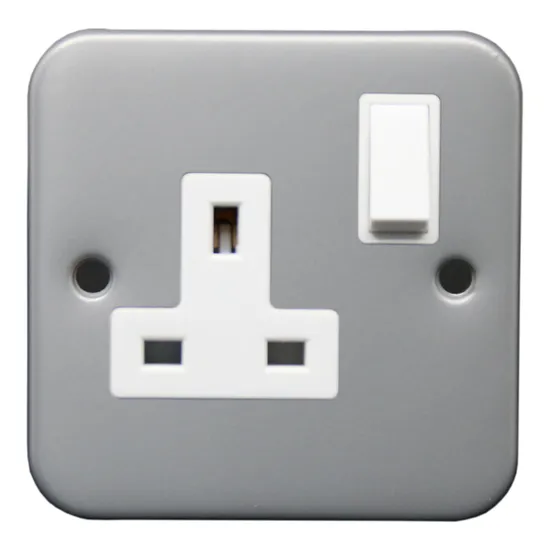
Industrial and commercial environments demand electrical infrastructure that can reliably handle elevated power loads without compromising safety or performance. British standard sockets, particularly those designed to meet BS 546 specifications, represent a critical component in high-load applications where conventional electrical outlets may prove inadequate. These robust sockets are engineered to support continuous operation under demanding conditions, making them indispensable in manufacturing facilities, heavy machinery installations, laboratory settings, and commercial kitchens where equipment draws substantial current over extended periods. Understanding the unique design characteristics and technical capabilities of british standard sockets enables facility managers, electrical contractors, and industrial operators to make informed decisions that ensure both operational efficiency and regulatory compliance across diverse high-power environments.
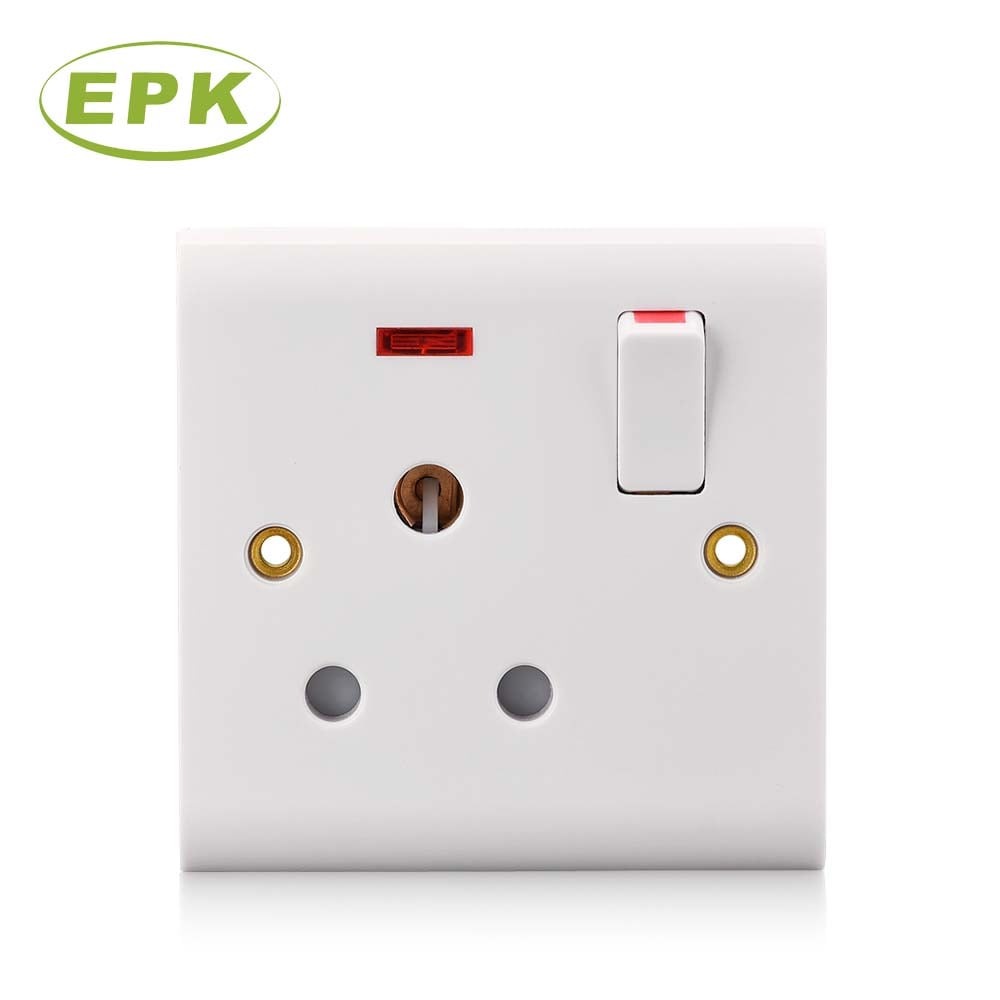
The selection of appropriate electrical outlets for high-load scenarios extends beyond simple amperage ratings and involves careful consideration of terminal construction, contact surface area, thermal management properties, and mechanical durability. British standard sockets designed for industrial use incorporate specific engineering features that distinguish them from residential-grade alternatives, including reinforced terminal blocks with superior clamping force, heat-resistant insulating materials capable of withstanding elevated operating temperatures, and contact pins manufactured from high-conductivity copper alloys that minimize resistance and thermal buildup. These technical refinements directly address the challenges inherent in high-load applications where sustained current draw generates significant heat and places continuous mechanical stress on electrical connections. The proper implementation of british standard sockets in demanding environments requires understanding not only their rated specifications but also the operational context in which they will function, including load profiles, duty cycles, environmental conditions, and maintenance accessibility considerations that collectively determine long-term reliability.
Engineering Fundamentals of High-Load Socket Design
Terminal Construction and Contact Surface Engineering
The core electrical performance of british standard sockets in high-load applications hinges on terminal design and contact surface characteristics that directly influence current-carrying capacity and thermal behavior. Premium industrial-grade sockets utilize solid brass or phosphor bronze terminals with substantial cross-sectional area to minimize electrical resistance, which is critical because even fractional ohm increases in contact resistance translate to significant heat generation under continuous high-current operation. The terminal clamping mechanism must maintain consistent contact pressure throughout thousands of insertion cycles while accommodating wire gauge variations commonly encountered in industrial installations. British standard sockets engineered for demanding applications typically feature screw-type terminals with captive washers and anti-loosening configurations that prevent gradual connection degradation from thermal cycling and mechanical vibration, phenomena frequently observed in manufacturing environments where equipment operates continuously under variable load conditions.
Contact pin geometry represents another crucial engineering consideration in high-load socket design, as the surface area and shape of the conductive interface directly determine current density and heat dissipation characteristics. Round pin configurations specified in BS 546 standards provide inherently superior contact reliability compared to flat blade designs because the circular geometry creates multiple contact points around the pin circumference, distributing current flow and reducing localized heating. The dimensional tolerances specified for british standard sockets ensure adequate insertion force to maintain secure mechanical connection while avoiding excessive wear that would compromise long-term reliability. In applications involving heavy machinery or industrial equipment, the socket terminals must also accommodate cable types with stranded conductors ranging from 2.5 to 6 square millimeters, requiring terminal chambers sized to accept these larger wire gauges without creating stress concentrations that could lead to conductor breakage or insulation damage during installation.
Thermal Management and Heat Dissipation Strategies
Sustained high-current operation generates substantial heat within electrical connections, making thermal management a critical design consideration for british standard sockets deployed in industrial settings. The choice of insulating material fundamentally determines a socket's ability to withstand elevated operating temperatures without degradation, with thermosetting plastics like urea formaldehyde and phenolic resins offering superior heat resistance compared to thermoplastic alternatives. Bakelite, a classic phenolic resin formulation, remains widely specified for industrial british standard sockets due to its exceptional dimensional stability at elevated temperatures, inherent flame resistance without halogenated additives, and superior tracking resistance that prevents conductive carbon path formation on insulating surfaces exposed to electrical stress and contamination. These material properties prove particularly valuable in environments where sockets may be exposed to oil mists, metal dust, or other airborne contaminants that could otherwise compromise electrical isolation.
The physical geometry of socket housings also influences thermal performance through convective heat transfer mechanisms that allow internal heat to dissipate to the surrounding environment. Well-designed british standard sockets incorporate adequate spacing between current-carrying components and the outer housing to prevent localized hot spots, while terminal chamber volumes are sized to provide thermal mass that buffers temperature fluctuations during load cycling. In high-load applications where sockets are installed in enclosed junction boxes or flush-mounted within walls, heat dissipation becomes more challenging due to restricted airflow, necessitating derating of nominal current capacity to ensure safe operating temperatures. Industrial electrical standards typically recommend reducing socket capacity by fifteen to twenty percent when installation conditions restrict natural convection cooling, a practice that extends component lifetime and reduces fire risk in continuous-duty applications where sockets may operate near their rated capacity for extended periods.
Mechanical Durability and Lifecycle Performance
The demanding operational conditions typical of industrial environments place substantial mechanical stress on electrical infrastructure, requiring british standard sockets to withstand repeated connection cycles, physical impact, and environmental contaminants while maintaining electrical integrity. High-quality sockets designed for commercial and industrial use are rated for fifteen thousand or more insertion cycles, representing a tenfold increase over residential-grade alternatives that typically fail mechanical endurance testing after fewer than five thousand cycles. This enhanced durability stems from reinforced internal components including heavier-gauge contact springs, impact-resistant housings with generous wall thickness, and mounting systems that distribute mechanical stress across the entire socket body rather than concentrating loads at vulnerable attachment points. In applications involving portable equipment or machinery that requires frequent connection and disconnection, the mechanical robustness of british standard sockets directly impacts maintenance costs and operational downtime by extending replacement intervals and reducing nuisance failures.
Environmental resistance represents another critical dimension of mechanical performance in industrial contexts where sockets may be exposed to moisture, chemical vapors, abrasive dust, or corrosive atmospheres that accelerate degradation of inferior components. While british standard sockets are not typically rated for outdoor or fully weatherproof applications, industrial variants incorporate gaskets and sealed terminal chambers that provide enhanced protection against ingress of moisture and particulate contamination. The surface finish applied to metallic components significantly influences corrosion resistance, with nickel or tin plating on terminals and mounting hardware preventing oxide formation that increases contact resistance and creates potential failure points. In food processing facilities, pharmaceutical manufacturing environments, and chemical plants where regular washdown procedures expose electrical infrastructure to moisture and cleaning agents, the specification of british standard sockets with appropriate environmental protection becomes essential to maintaining system reliability and avoiding costly equipment failures that disrupt production operations.
Application-Specific Requirements and Load Characteristics
Continuous Duty Versus Intermittent Load Profiles
Understanding the distinction between continuous and intermittent load profiles proves essential when selecting british standard sockets for industrial applications, as these operating patterns impose fundamentally different thermal and mechanical stresses on electrical connections. Continuous duty applications involve sustained current draw at or near rated capacity for extended periods, typical of refrigeration equipment, ventilation systems, process heating equipment, and circulation pumps that operate around the clock with minimal interruption. These scenarios generate steady-state thermal conditions where socket components reach equilibrium temperatures determined by current magnitude, ambient conditions, and heat dissipation characteristics. The critical design consideration for continuous duty applications involves ensuring that equilibrium temperatures remain within safe limits for all socket materials throughout their operational envelope, including worst-case scenarios combining maximum rated current with elevated ambient temperatures that may occur during summer months or in poorly ventilated equipment rooms.
Intermittent load profiles characteristic of machine tools, welding equipment, motor starters, and batch processing machinery present different engineering challenges because repeated load cycling creates thermal stress from expansion and contraction of dissimilar materials within the socket assembly. Each thermal cycle produces microscopic movement at electrical interfaces that can gradually loosen mechanical connections or create fretting corrosion at contact surfaces, phenomena that increase resistance and accelerate degradation. British standard sockets intended for intermittent high-load service must incorporate design features that accommodate thermal cycling without compromising long-term reliability, including terminal screws with locking features that resist vibration loosening, spring-loaded contacts that maintain consistent pressure despite dimensional changes, and housing materials with thermal expansion coefficients matched to metallic components to minimize differential movement. The duty cycle characteristics of intermittent loads also influence circuit protection strategy, as conventional thermal circuit breakers may not trip appropriately when brief high-current pulses are interspersed with extended idle periods that allow protective devices to cool between demand events.
Inductive Loads and Power Factor Considerations
Industrial equipment frequently presents inductive load characteristics due to motor windings, transformer primaries, and electromagnetic actuators that store energy in magnetic fields, creating phase displacement between voltage and current waveforms that affects socket performance in ways distinct from purely resistive loads. British standard sockets supplying inductive loads experience higher peak currents during each AC cycle compared to resistive loads of equivalent power rating, because the lagging power factor causes current to flow when voltage is not at its maximum value, requiring higher current magnitude to deliver the same average power. This elevated peak current increases resistive heating in socket contacts and conductors according to the square of current magnitude, meaning that a motor drawing fifteen amperes at 0.7 power factor generates significantly more heat than a resistive heater drawing fifteen amperes at unity power factor despite identical apparent current readings on standard measuring instruments.
The switching characteristics of inductive loads also impose additional stress on british standard sockets through arc formation during plug insertion and removal under energized conditions, a practice strongly discouraged but occasionally occurring in industrial settings. Inductive loads resist sudden current changes, creating voltage spikes during disconnection as stored magnetic energy dissipates through any available current path, often producing visible arcing at the separating contacts that erodes metal surfaces and deposits conductive carbon residues on insulating components. Repeated arcing events accelerate contact degradation and can create tracking paths on socket interiors that eventually lead to insulation failure and potential shock hazards. Industrial british standard sockets designed for motor and transformer applications should be installed downstream of appropriate switching devices such as contactors or motor starters that interrupt current under controlled conditions, relegating the socket to a non-breaking connection role that extends its operational lifetime and maintains electrical safety. The specification of switched socket variants with integrated switching mechanisms provides partial mitigation by allowing users to de-energize circuits before physical disconnection, though switch ratings must be carefully matched to load characteristics to ensure reliable interruption capability.
Surge and Transient Voltage Management
Industrial electrical environments experience frequent transient overvoltage events from lightning-induced surges, utility switching operations, capacitor bank energization, and most commonly from the switching of inductive loads within the facility itself, creating voltage spikes that can reach several thousand volts with durations measured in microseconds. While these transients do not directly damage british standard sockets under normal circumstances, repeated exposure to high-magnitude surges can cause gradual degradation of insulating materials through tracking and surface carbonization, particularly when sockets operate in dusty or contaminated environments where conductive deposits accumulate on insulating surfaces. The air gaps specified in BS 546 socket designs provide basic impulse voltage withstand capability, but sustained exposure to repetitive transients in severe electrical environments may justify additional protective measures including surge protective devices installed at distribution panels or local transient voltage surge suppressors integrated into equipment power cords.
The installation environment significantly influences the severity of transient voltage exposure experienced by british standard sockets, with facilities having extensive cable runs, overhead power distribution systems, or locations in regions with high lightning activity facing elevated surge risk. The routing of supply cables to sockets also affects susceptibility to induced transients, as long parallel runs adjacent to high-current conductors or exposure to electromagnetic fields from large motors and transformers can couple transient energy into branch circuits. Industrial electrical design best practices recommend limiting branch circuit lengths, maintaining separation between power and control wiring, and implementing zone-based surge protection strategies that provide coordinated suppression at service entrance, distribution, and utilization points. For critical equipment supplied through british standard sockets in surge-prone environments, the specification of industrial-grade surge protectors with appropriate voltage protection rating and energy absorption capacity safeguards both the connected load and the supply infrastructure from cumulative degradation caused by repetitive transient stress.
Installation Standards and Regulatory Compliance
Wiring Practices and Terminal Connection Methods
Proper installation technique critically determines whether british standard sockets achieve their designed performance and safety characteristics in high-load applications, with terminal connection quality representing the single most important factor influencing long-term reliability. The screw-type terminals commonly specified in industrial sockets require appropriate wire preparation including conductor trimming to correct insertion depth, insulation stripping to expose adequate conductor length without excess bare wire, and proper positioning within the terminal chamber to ensure full engagement with the clamping mechanism. Stranded conductors should be twisted tightly to consolidate individual wire strands and prevent loose filaments from extending beyond the clamping area where they might contact adjacent terminals or grounded components, creating short circuit hazards. Some installation standards recommend the use of ferrules or wire end sleeves on stranded conductors to create a solid termination surface that improves contact reliability and prevents gradual strand breakage from repeated thermal cycling.
The torque applied when tightening terminal screws significantly affects connection resistance and mechanical security, with insufficient tightening leaving gaps that increase contact resistance and allow vibration loosening, while excessive torque can damage conductor strands, crack insulating components, or strip threads in terminal bodies. Industrial electrical standards typically specify terminal screw torque values between 0.8 and 1.2 Newton-meters for british standard sockets in the fifteen ampere rating class, values that should be verified using calibrated screwdrivers or torque-limiting tools during installation of critical circuits. The quality and condition of terminal screws also influences connection reliability, with worn or corroded hardware requiring replacement rather than reuse, and dissimilar metal combinations avoided to prevent galvanic corrosion in humid environments. After initial installation and energization, best practice recommends re-tightening terminal connections after approximately one week of operation to compensate for initial settling and cold flow of conductor materials under clamping stress, a maintenance step particularly important for high-load circuits where connection resistance directly impacts operating temperatures.
Circuit Protection and Overcurrent Device Coordination
The selection and sizing of overcurrent protective devices for circuits supplying british standard sockets in high-load applications requires careful analysis of load characteristics, cable current-carrying capacity, and fault current magnitudes to ensure coordinated protection that prevents equipment damage while avoiding nuisance tripping during normal operation. Industrial branch circuits typically employ either miniature circuit breakers with thermal-magnetic trip characteristics or motor protection circuit breakers with adjustable trip settings that accommodate the elevated starting currents characteristic of motor loads. The rated current of protective devices should be selected based on the continuous current demand of connected equipment with appropriate margin for inrush currents and transient overloads, while ensuring that the device rating does not exceed the current-carrying capacity of either the supply cable or the socket itself, as the weakest component establishes the maximum permissible circuit current.
Fault current considerations become particularly important in industrial installations where supply transformers located near utilization equipment can deliver extremely high short-circuit currents that may exceed the interrupting capacity of inadequately specified protective devices. British standard sockets themselves have limited fault current withstand capability and rely on upstream overcurrent devices to interrupt fault conditions before thermal and mechanical stresses cause component failure or fire hazard. The fault loop impedance from source to socket location determines the magnitude of fault current that will flow during ground fault or phase-to-phase short circuit conditions, with lower impedance paths producing higher fault currents that require protective devices with correspondingly higher interrupting ratings. Industrial electrical design must verify that installed circuit breakers possess adequate short-circuit interrupting capacity for the specific installation location, accounting for available fault current at the distribution panel and the impedance of branch circuit conductors between panel and socket positions.
Grounding and Earth Fault Protection
Effective grounding systems represent a fundamental safety requirement for installations utilizing british standard sockets in industrial environments, providing both equipment protection and personnel safety by ensuring rapid fault current flow that enables protective device operation during insulation failure events. The BS 546 socket standard specifies a dedicated earth pin with diameter and positioning designed to ensure ground connection establishes before live conductors engage during plug insertion, a crucial safety feature that maintains equipment chassis at ground potential continuously throughout the connection process. The earth terminal within the socket must be connected to the electrical installation's protective earth system using conductors sized according to the current-carrying capacity of line conductors, typically requiring earth conductors equal in size to line conductors for circuits up to sixteen square millimeters cross-sectional area.
In high-load industrial applications, the integrity of earth connections directly influences both electromagnetic compatibility and electrical safety, as elevated ground currents during normal operation can create voltage drops across earth conductors that affect sensitive electronic equipment or create potential differences between separately grounded equipment items. British standard sockets installed in areas with multiple grounded equipment connections should utilize earth conductors with sufficient cross-sectional area to minimize ground loop impedances and avoid creating circulating currents between different ground reference points. The use of residual current devices provides additional personnel protection in environments where increased shock risk exists due to wet conditions, conductive structures, or reduced insulation resistance from contamination exposure. However, the specification of RCD protection for motor and inductive loads requires careful consideration of device type and sensitivity settings to avoid nuisance tripping from normal earth leakage currents that increase with motor size and cable length, with time-delayed or type B residual current devices often specified to accommodate the DC components and higher-frequency harmonics present in variable frequency drive applications.
Operational Environment Considerations
Ambient Temperature and Ventilation Requirements
The ambient temperature in which british standard sockets operate significantly influences their current-carrying capacity and long-term reliability, as elevated environmental temperatures reduce the thermal gradient available for heat dissipation from internal components to surroundings. Standard socket ratings assume an ambient temperature of twenty-five degrees Celsius, with derating required when installations occur in locations experiencing higher normal temperatures such as boiler rooms, attic spaces, or outdoor enclosures exposed to solar heating. The relationship between ambient temperature and permissible load current follows approximately linear derating of two percent per degree Celsius above the reference temperature, meaning that a socket installed in a forty-degree environment should be loaded to no more than seventy percent of its nameplate rating to maintain equivalent operating temperatures. Industrial facilities in tropical regions or areas with limited climate control must account for seasonal temperature variations when sizing electrical infrastructure, ensuring adequate capacity margin to prevent overheating during peak temperature conditions.
Ventilation and air circulation patterns around socket locations directly affect convective heat transfer rates that determine component temperatures under load. British standard sockets installed within enclosed junction boxes, recessed wall cavities, or behind equipment panels experience restricted airflow that impedes natural convection cooling and necessitates additional derating beyond ambient temperature corrections. The orientation of socket mounting also influences thermal performance, with ceiling-mounted or vertically oriented installations generally providing superior heat dissipation compared to floor-level horizontal mounting where warm air can accumulate around terminals. In high-density electrical installations where multiple sockets are grouped in proximity, thermal interaction between adjacent components can create localized hot zones where ambient temperatures exceed general room conditions, requiring either increased spacing between outlets or forced ventilation to maintain acceptable operating temperatures throughout the installation.
Contamination Resistance and Maintenance Accessibility
Industrial environments expose electrical infrastructure to diverse contamination sources including metal dust from machining operations, oil mists from hydraulic systems, cement dust from construction materials, and chemical vapors from process operations, all of which can compromise the performance of british standard sockets through insulation degradation or contact surface contamination. The selection of socket designs appropriate for specific environmental conditions requires understanding the nature and severity of contamination exposure, with ingress protection ratings providing standardized indicators of resistance to solid particle and moisture penetration. While domestic-grade british standard sockets typically offer minimal environmental protection, industrial variants incorporate gaskets, sealed terminal chambers, and protective covers that enhance resistance to contamination ingress, though even these enhanced designs cannot withstand severe exposure without periodic maintenance.
Maintenance accessibility represents an important installation planning consideration, as british standard sockets in high-load applications require periodic inspection and testing to verify continued safe operation. Terminal connections should be checked for tightness, contact surfaces examined for signs of overheating or arcing damage, and insulating components inspected for tracking or carbonization that indicates electrical stress or contamination exposure. The installation height and physical location of sockets influences maintenance convenience, with positions requiring ladders, scaffolding, or production shutdown for access creating barriers to routine inspection that may result in deferred maintenance and increased failure risk. Industrial electrical installations benefit from standardized socket mounting heights, clear labeling systems that identify circuit origins and protective device locations, and documentation of load assignments that enables maintenance personnel to prioritize inspection intervals based on actual service severity rather than generic time-based schedules.
Electromagnetic Compatibility in Sensitive Environments
While british standard sockets themselves do not generate significant electromagnetic emissions, the loads they supply and the wiring configurations connecting them to power distribution systems can create electromagnetic compatibility challenges in facilities housing sensitive electronic equipment, instrumentation systems, or communication infrastructure. High-current switching transients from motor starters, solenoid actuators, or heater controls connected through sockets can couple interference onto supply circuits that propagates to affect other equipment, particularly when loads operate at high duty cycles or switching frequencies. The mitigation of conducted electromagnetic interference requires attention to wiring practices including separation of power circuits from signal cables, use of twisted pair configurations for reduced magnetic field emission, and specification of line filters or suppression components at interference-generating loads.
The earth connection integrity of british standard sockets also influences facility electromagnetic compatibility by providing low-impedance return paths for high-frequency noise currents that would otherwise couple into signal ground systems. Installations supporting variable frequency drives, switching power supplies, or other electronic loads generating harmonic currents benefit from dedicated earth conductors with minimal inductance, avoiding daisy-chained ground connections that create series impedance allowing noise voltages to develop between equipment chassis. In environments with stringent electromagnetic compatibility requirements such as medical facilities, laboratories, or telecommunications equipment rooms, the specification of isolated ground sockets with dedicated earth conductors running directly to main grounding electrode systems provides superior noise immunity compared to conventional ground connections that share earth paths with other building loads. However, such specialized grounding configurations require careful design to maintain electrical safety while achieving desired electromagnetic performance, as improper implementation can create multiple ground reference points that defeat the intended isolation benefits.
Product Selection Criteria and Specification Guidance
Rating Verification and Certification Requirements
The specification of british standard sockets for high-load industrial applications requires verification that products meet applicable safety standards and possess genuine certification from recognized testing authorities rather than relying solely on manufacturer claims or nominal compliance statements. Authentic BS 546 compliant sockets carry certification marks from agencies such as BSI, SABS, or equivalent national standards bodies confirming conformance to dimensional, electrical, and safety requirements established in the standard. The examination of certification documentation should verify that testing encompassed the specific socket variant being specified, as manufacturers sometimes extrapolate certification from tested samples to derivative products without subjecting design variations to independent verification. Industrial procurement specifications should explicitly require certified products and reject offerings lacking verifiable compliance documentation, as the cost differential between certified and non-compliant components proves negligible compared to potential liability exposure and safety risks from substandard products.
Beyond basic standard compliance, high-load applications benefit from sockets tested and rated for enhanced performance characteristics including elevated temperature operation, extended mechanical life, and resistance to environmental stressors relevant to the intended installation environment. Some manufacturers subject their british standard sockets to supplementary testing protocols that verify performance margins beyond minimum standard requirements, providing additional assurance of reliability in demanding service conditions. The specification of products with documented test reports showing actual performance characteristics rather than merely claiming standard compliance enables engineering judgment regarding suitability for specific applications, particularly in critical installations where socket failure would create significant operational or safety consequences. Industrial facility owners and electrical contractors should maintain records of socket specifications and certification documentation as part of installation quality assurance processes, enabling future verification of product authenticity and providing liability protection in the event of equipment failures or safety incidents.
Material Quality and Component Construction
The materials and manufacturing processes employed in british standard socket production directly determine product quality, reliability, and service life, with significant variation existing across products nominally meeting the same basic standard. Terminal components manufactured from brass alloys with high copper content provide superior electrical conductivity and corrosion resistance compared to zinc-based alternatives that may be specified in economy-grade products, with contact resistance measurements revealing performance differences that manifest as elevated operating temperatures under continuous high-current service. The gauge thickness of metallic components influences mechanical durability and current-carrying capacity, with heavier sections providing lower resistance and greater heat dissipation area that translates directly to thermal performance advantages. Industrial purchasers should request material specifications and manufacturing details from suppliers when specifying british standard sockets for critical applications, as visual inspection alone often cannot distinguish premium components from inferior alternatives.
The insulating material composition represents another critical quality determinant, with thermosetting resins such as bakelite offering dramatically superior heat resistance and dimensional stability compared to low-cost thermoplastic housings that soften at elevated temperatures and may deform during high-load service. The presence of reinforcing fillers, flame retardant additives, and ultraviolet stabilizers influences insulating material performance under various environmental stressors, with specification sheets providing limited insight into formulation details that govern real-world durability. Long-term reliability of british standard sockets depends substantially on manufacturing quality control processes including dimensional verification to ensure proper fit between mating components, contact force testing to verify adequate insertion retention, and electrical testing to confirm resistance characteristics meet design specifications. Industrial facilities implementing quality assurance programs for electrical components may conduct incoming inspection of socket samples including dimensional measurements, contact resistance testing, and examination of terminal construction to verify that supplied products meet specified quality standards before installation in critical applications.
Switched Variants and Integrated Protection Features
The availability of british standard sockets with integrated switching mechanisms provides operational benefits including convenient load control without plug manipulation and enhanced safety through visible disconnection indication when circuits are de-energized. Switched socket variants incorporate contacts rated for the same current capacity as the socket itself, enabling interruption of connected loads without requiring upstream switching devices, though the breaking capacity limitations of socket switches generally restrict their use to non-inductive resistive loads or small motors with controlled starting characteristics. The switch mechanism reliability and endurance rating represents a critical specification parameter, as inadequate designs may fail prematurely when subjected to frequent switching cycles under load conditions, potentially creating safety hazards from welded contacts or incomplete disconnection. Industrial applications involving frequent load cycling should specify switched british standard sockets with mechanical endurance ratings exceeding ten thousand operations under rated load to ensure adequate service life.
Additional integrated features including neon indicator lamps, pilot lights, or voltage presence indicators enhance operational convenience and safety by providing visible confirmation of circuit energization status without requiring test equipment. These indicators prove particularly valuable in industrial settings where multiple sockets supply various equipment items and visual confirmation of energization status assists operators in identifying live circuits during maintenance procedures or troubleshooting activities. However, the electrical reliability of indicator components represents an additional potential failure mode, with inferior indicator lamps experiencing short service life under continuous operation or voltage transient exposure. The specification of british standard sockets with integrated indicators should verify that lamp assemblies utilize appropriate voltage ratings, current-limiting resistance values, and mechanical construction suited for industrial vibration exposure. Some advanced socket designs incorporate additional features such as residual current protection, surge suppression, or time-delay disconnection functions that provide integrated circuit protection capabilities, though such specialized variants require careful evaluation to ensure that integrated protection functions complement rather than duplicate or interfere with building electrical system protective devices.
FAQ
What current rating should I specify for british standard sockets in motor applications?
Motor applications require british standard sockets rated for at least 125 percent of motor full-load current to accommodate starting inrush currents that typically reach four to six times running current for three-phase motors and five to eight times for single-phase motors. This oversizing prevents nuisance circuit breaker tripping and reduces contact heating during motor start events. For motors with frequent start-stop cycles or plugging duty, additional margin should be specified with socket ratings reaching 150 percent of motor nameplate current. Always verify that branch circuit protection coordination allows motor starting current to flow without interruption while providing adequate short-circuit protection for the socket and supply conductors.
How often should terminal connections in high-load sockets be inspected and retightened?
British standard sockets operating at or near their rated capacity in continuous duty applications should undergo terminal connection inspection annually, with retightening performed if torque verification reveals looseness. New installations require reinspection after approximately one week of initial operation to compensate for conductor cold flow and settling under clamping stress, then follow annual inspection cycles thereafter. Applications with severe vibration exposure, thermal cycling, or critical load requirements may justify semi-annual inspection intervals. Infrared thermography provides an effective non-intrusive inspection method for identifying overheating connections without circuit interruption, enabling condition-based maintenance that targets deteriorating connections before failure occurs.
Can british standard sockets be installed outdoors or in wet locations?
Standard british standard sockets complying with BS 546 specifications are not rated for outdoor installation or direct exposure to weather, as they lack the sealing and corrosion resistance necessary for reliable operation in wet environments. Outdoor applications require weatherproof enclosures with appropriate ingress protection ratings, typically IP65 or higher, with the socket installed inside the protected enclosure rather than exposed to weather directly. Even within protective enclosures, environmental moisture and temperature extremes accelerate corrosion and degradation, necessitating more frequent inspection and potentially shortened replacement intervals compared to indoor installations. For permanently installed outdoor power points, industrial electrical codes typically mandate the use of socket types specifically designed and certified for exterior service rather than attempting to adapt indoor-rated british standard sockets through supplementary protection measures.
What derating is required when multiple high-load sockets are grouped together?
When multiple british standard sockets are installed in close proximity with simultaneous high-load operation, thermal interaction between adjacent outlets necessitates current derating to prevent excessive temperature rise. As a general guideline, sockets spaced less than 50 millimeters apart with concurrent loads exceeding 70 percent of rating should be derated by 10 to 15 percent to account for reduced heat dissipation from thermal crowding. The exact derating magnitude depends on installation configuration including mounting substrate thermal properties, ventilation conditions, and loading diversity across multiple outlets. Thermal modeling or temperature measurement under actual operating conditions provides the most reliable guidance for specific installations, particularly in high-density electrical rooms where multiple circuits operate simultaneously at elevated load levels. Alternative mitigation strategies include increasing spacing between sockets, providing forced ventilation, or specifying sockets with higher ratings to reduce thermal stress at given load currents.
Table of Contents
- Engineering Fundamentals of High-Load Socket Design
- Application-Specific Requirements and Load Characteristics
- Installation Standards and Regulatory Compliance
- Operational Environment Considerations
- Product Selection Criteria and Specification Guidance
-
FAQ
- What current rating should I specify for british standard sockets in motor applications?
- How often should terminal connections in high-load sockets be inspected and retightened?
- Can british standard sockets be installed outdoors or in wet locations?
- What derating is required when multiple high-load sockets are grouped together?