
 EN
EN

CE certified wall switches form the backbone of safe and compliant electrical infrastructure in commercial buildings. When you install CE certified wall switches in your facility, you're investing in equipment that meets rigorous European Union safety standards and has undergone thorough testing to ensure reliability. Commercial installations demand switches that perform consistently under heavy use, withstand environmental stress, and comply with binding electrical regulations. Understanding CE certified wall switches is essential for facility managers, electrical contractors, and building owners who prioritize safety and regulatory adherence.
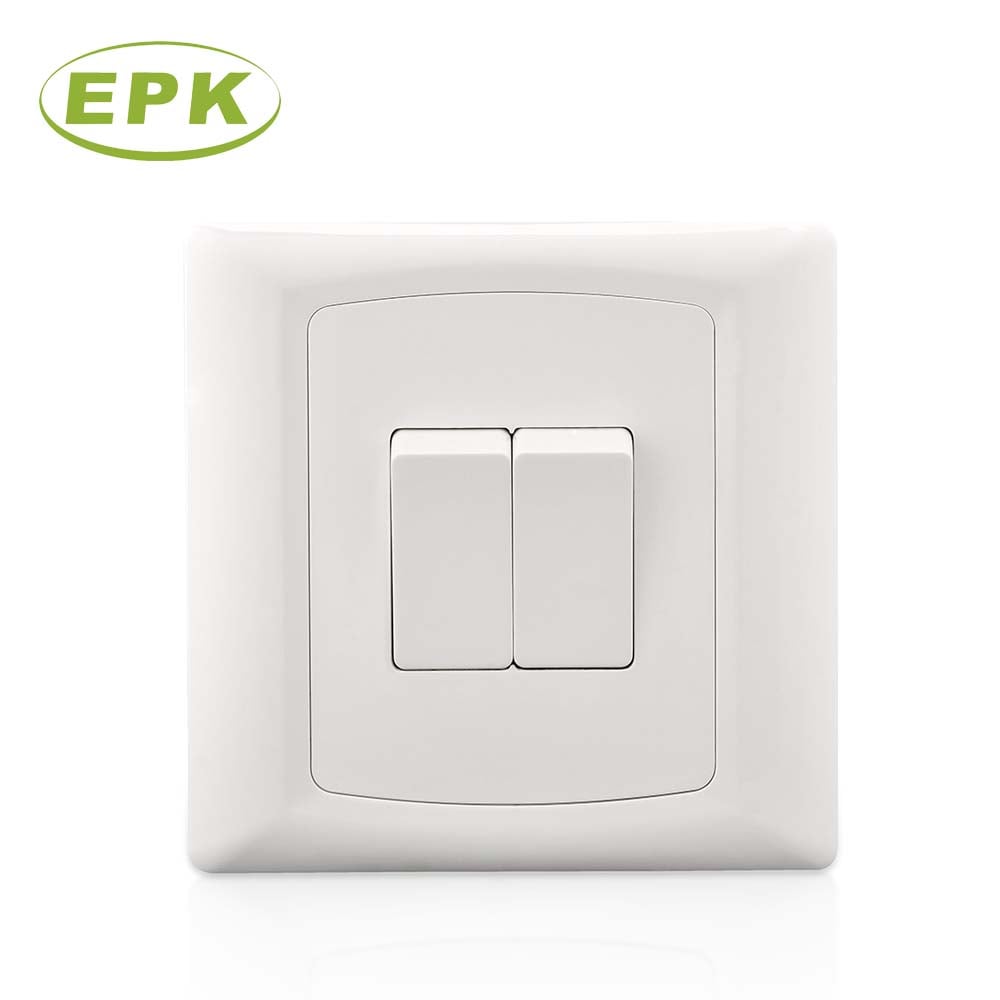
Commercial installations require CE certified wall switches that go far beyond basic functionality. These switches must demonstrate durability through standardized cycle testing, maintain electrical integrity under variable load conditions, and display clear certification marks proving compliance with EN 60669 and related directives. Choosing CE certified wall switches protects your investment, reduces liability risks, and ensures your commercial space meets current electrical codes and industry best practices.
Understanding CE Certification Standards for Wall Switches
The European Union Safety Framework
CE certification is a mandatory conformity marking required for products sold within the European Economic Area. CE certified wall switches must comply with the Low Voltage Directive (LVD) 2014/35/EU and the Electromagnetic Compatibility Directive (EMC) 2014/30/EU. These directives establish minimum safety requirements that protect end users and ensure consistent electrical performance across border regions. Commercial installations rely on CE certified wall switches because the certification confirms the manufacturer has tested the product against established safety benchmarks and documented conformity assessments. The CE mark itself represents a manufacturer's declaration that the product meets all applicable European Union safety, health, and environmental protection requirements.
EN 60669 Standard Compliance
EN 60669 is the harmonized standard specifically governing low-voltage electronic switches. CE certified wall switches tested to EN 60669-1 must endure a minimum of 20,000 electrical operating cycles without failure, demonstrating mechanical and electrical durability. This standard covers operational characteristics, temperature performance, dielectric strength, and insulation properties. Commercial installations benefit from CE certified wall switches because the EN 60669 testing regime simulates real-world usage patterns and stress conditions. Manufacturers of CE certified wall switches must provide technical documentation, test reports, and evidence of conformity assessment to verify that products meet these exacting performance thresholds.
Key Safety and Performance Features
Electrical Durability and Contact System Design
CE certified wall switches incorporate contact systems engineered for extended service life in commercial environments. Copper contacts used in premium CE certified wall switches offer superior electrical conductivity, reduce arcing, and minimize contact wear over thousands of cycles. The switch mechanism must maintain rated current handling capacity under temperature variations, humidity exposure, and dust accumulation typical in commercial spaces. CE certified wall switches are rated for continuous operation at defined current levels, such as 10 amperes at 220-250 volts AC, ensuring reliable power delivery to connected devices. Material selection, assembly precision, and quality control testing all contribute to the robust performance characteristics expected from CE certified wall switches in demanding commercial applications.
Thermal Stability and Environmental Performance
Commercial installations expose CE certified wall switches to temperature fluctuations, humidity gradients, and varying atmospheric conditions. CE certified wall switches must maintain electrical and mechanical integrity across operating temperatures typically ranging from 16°C to 35°C in temperate commercial environments. Polymeric components used in CE certified wall switches are formulated to resist UV degradation, flame propagation, and temperature-induced dimensional changes. Insulation materials must prevent leakage currents and maintain dielectric strength even after prolonged exposure to moisture. The construction of CE certified wall switches ensures that terminal tightness, component fitment, and electrical pathways remain stable throughout the product's operational lifespan, supporting consistent performance in offices, retail spaces, industrial facilities, and institutional buildings.
Installation Requirements and Best Practices
Mounting Standards and Electrical Integration
CE certified wall switches designed for commercial installations typically feature standardized mounting dimensions, such as 86×86 millimeter panel openings, allowing seamless integration into modular electrical installation systems. Proper installation of CE certified wall switches requires adherence to national electrical codes and local building regulations that reference EN 60669 compliance. Terminal design in CE certified wall switches accommodates both screw-type connections for permanent wiring and push-fit contact points for certain configurations, ensuring flexible integration into existing commercial electrical distribution systems. Installation personnel must verify that circuit breakers provide appropriate overcurrent protection and that the voltage and frequency specifications match the CE certified wall switches' rated parameters. Documentation accompanying CE certified wall switches includes installation diagrams, terminal connection protocols, and grounding requirements that electricians must follow to preserve certification validity and ensure operational safety.
Maintenance and Lifecycle Considerations
CE certified wall switches installed in commercial buildings require periodic inspection to verify that terminal connections remain tight, contact surfaces show no visible arcing damage, and the switch mechanism responds smoothly to manual actuation. Dust accumulation inside switch enclosures can compromise electrical performance, so maintenance schedules for CE certified wall switches should include regular cleaning and visual examination. When CE certified wall switches reach end-of-life or show signs of performance degradation, replacement with equivalent certified models preserves the integrity of the electrical installation. Record-keeping related to CE certified wall switches, including installation dates, maintenance intervals, and replacement history, supports facility managers in demonstrating ongoing code compliance during building inspections. Quality CE certified wall switches with proper maintenance typically deliver ten to twenty years of reliable service in typical commercial environments, protecting facility investments and ensuring uninterrupted electrical functionality.
FAQ
What does the CE mark on wall switches actually mean for commercial installations?
The CE mark signifies that CE certified wall switches comply with all applicable European Union health, safety, and environmental directives. For commercial installations, the CE mark confirms that the switches have undergone conformity assessment, met performance testing requirements such as EN 60669 cycle testing, and are legally permitted for sale and installation within EU member states. The presence of CE certification does not guarantee superior performance compared to non-certified switches, but it does confirm documented compliance with harmonized safety standards, reducing legal liability for facility owners and contractors who specify CE certified wall switches.
How do CE certified wall switches compare to switches without CE certification?
CE certified wall switches have undergone third-party testing and documentation procedures that verify safety and performance claims, whereas uncertified switches lack this independent verification. Commercial installations in EU jurisdictions legally require CE certified wall switches, as installation of non-compliant switches violates building codes and electrical regulations. CE certified wall switches typically incorporate design features such as enhanced insulation materials, validated contact systems, and thermal management provisions that reflect compliance with stringent European standards. While CE certified wall switches may cost more than uncertified alternatives, the investment in certified equipment protects against installation failures, reduces warranty disputes, and ensures insurance coverage for electrical incidents.
Can CE certified wall switches be used in commercial installations outside the European Union?
CE certified wall switches meet European Union standards but may not automatically comply with electrical codes in other regions that follow different certification systems, such as UL certification in North America or other regional standards. However, many commercial facility managers and international developers prefer CE certified wall switches because the European standards represent rigorous safety protocols recognized globally. Before specifying CE certified wall switches for installations outside the EU, verify that local electrical codes either accept CE certification or require supplementary testing and certification through regional authorities. International commercial projects often benefit from CE certified wall switches because the certification provides documented evidence of safety compliance and facilitates third-party audits during construction verification phases.